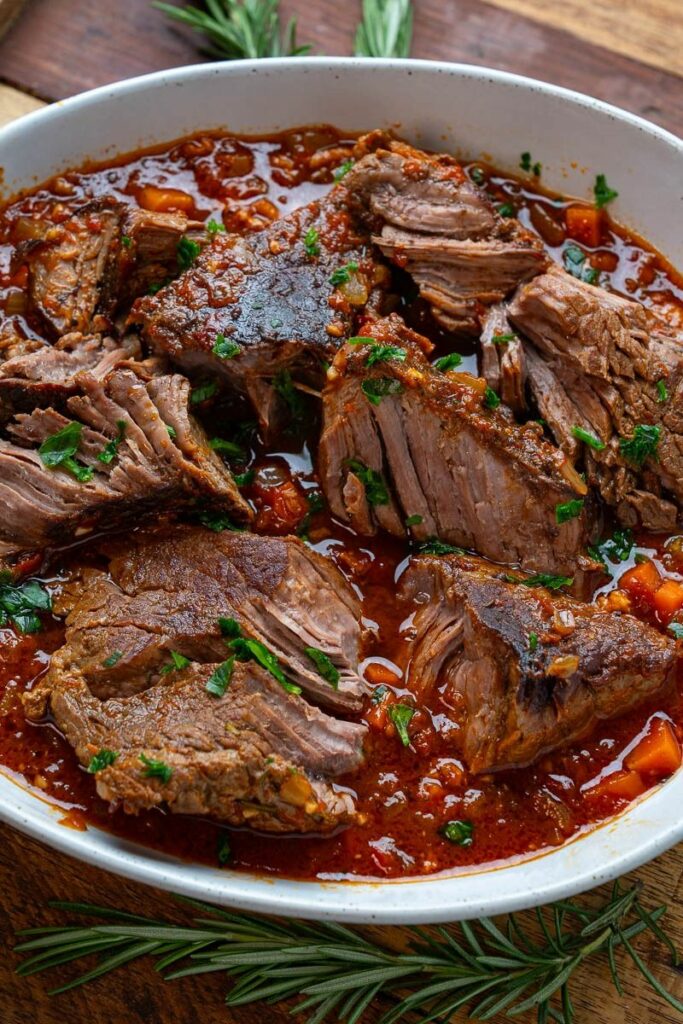
Stracotto means overcooked in Italian, and in this case that is the highest compliment. A beef chuck roast spends hours in a low oven with red wine, San Marzano tomatoes, and a soffritto of onion, carrot, and celery until the meat gives way to the gentlest nudge of a fork and the braising liquid turns into a glossy, deeply savory sauce.
Advertisements1
This is the Sunday dish Italian grandmothers make for the whole family, and it is forgiving in the best way. Once the pot is in the oven your work is done, and the leftovers get even better the next day. Serve it over polenta, mashed potatoes, or wide egg noodles, or shred it and pile it into crusty rolls for a stracotto sandwich.
The one thing that separates good stracotto from great stracotto is the sear. Take the extra ten minutes to brown the roast on every side at a real high heat, and you build the flavor base that carries through the entire three-hour braise.
Why You'll Love This Recipe
About the Ingredients
3.5 lb (1.6 kg) boneless beef chuck roast, tied with kitchen twine
Chuck is ideal because its marbling melts during the long braise. If chuck is unavailable, a boneless beef shoulder roast or brisket flat works, but avoid lean cuts like round, which turn dry and stringy.
2 tbsp olive oil
Use regular olive oil, not expensive extra-virgin, since it is going to a high sear. Avocado oil is a fine high-heat substitute.
1 large yellow onion, finely diced (about 1 1/2 cups)
Yellow onion gives the sweetest soffritto base. White onion is sharper, so if you use it, add an extra pinch of sugar to the pot.
2 medium carrots, finely diced (about 1 cup)
Look for firm carrots without bendy ends for the best sweetness. Parsnips can stand in for half the carrots for a slightly sweeter, more floral braise.
2 celery stalks, finely diced (about 3/4 cup)
Choose celery with tight, glossy ribs; limp celery means less flavor. Fennel bulb is a lovely swap if you want a subtle anise note.
4 garlic cloves, minced
Fresh garlic is best here; add it late in the sauté so it does not burn. Jarred minced garlic works in a pinch, use about 1 tablespoon.
1 cup (240 ml) dry red wine, such as Chianti or Sangiovese
A dry, medium-bodied red you would actually drink is the rule. No wine on hand? Swap in 1 cup beef broth plus 1 tablespoon red wine vinegar.
1 can (28 oz / 800 g) whole San Marzano tomatoes, crushed by hand
San Marzanos are sweeter and less acidic than generic plum tomatoes. If you cannot find them, use good-quality whole peeled tomatoes and add a pinch of sugar.
2 cups (480 ml) low-sodium beef broth
Low-sodium lets you control the final seasoning. Chicken broth is a fine substitute, though the finished sauce will be a touch lighter.
1 tsp kosher salt, plus more for seasoning
Kosher salt dissolves and seasons evenly; if using fine table salt, start with 3/4 teaspoon.
1 tsp freshly ground black pepper
Fresh-cracked pepper is far more aromatic than pre-ground. A teaspoon of whole peppercorns cracked in a mortar is even better.
Tips & Tricks
Do not skip drying the meat
Pat the roast completely dry with paper towels before searing. Any surface moisture steams instead of browns, and you lose the crust that gives stracotto its depth.
Sear hotter than feels comfortable
Get the oil shimmering and almost smoking before the meat goes in, and do not move it for 4 to 5 minutes per side. A pale roast means a pale, flat sauce.
Taste and season at the very end
The sauce reduces and concentrates as it cooks, so salt added early can become overpowering. Season after the roast comes out and the fat is skimmed.
- Keep the liquid at a gentle simmer, never a rolling boil: If the braise bubbles hard, the meat fibers seize and turn stringy. Aim for lazy bubbles around the edges and a steady 300 F (150 C) oven.
Pro Tips
Step-by-Step Instructions
1. Preheat and dry the roast
Preheat the oven to 300 F (150 C). Pat the chuck roast completely dry with paper towels and season all over with the kosher salt and black pepper, pressing the seasoning into the surface.
2. Sear the beef
Heat the olive oil in a large Dutch oven over medium-high heat until it shimmers, about 2 minutes. Add the roast and sear undisturbed for 4 to 5 minutes per side, about 12 minutes total, until deeply golden brown on all sides, then transfer to a plate.
3. Build the soffritto
Lower the heat to medium and add the onion, carrot, and celery to the pot. Cook for 6 to 8 minutes, stirring occasionally, until softened and the onion is translucent and just turning golden at the edges.
4. Bloom the garlic
Stir in the garlic and cook for 45 seconds, just until fragrant. Do not let it brown or it will turn bitter.
5. Deglaze with wine
Pour in the red wine and scrape up every browned bit from the bottom of the pot with a wooden spoon. Simmer for 3 to 4 minutes until the wine reduces by about half and the sharp alcohol smell is gone.
6. Add tomatoes and broth
Stir in the crushed tomatoes and beef broth, then nestle the roast back into the pot along with any juices on the plate. The liquid should come about two-thirds of the way up the meat; add a splash more broth if needed.
7. Braise low and slow
Cover the pot and transfer to the oven. Braise for 2 hours 30 minutes to 3 hours, turning the roast once at the halfway point, until a fork slides in with no resistance and the meat shreds easily, or an instant-read thermometer reads 200 to 205 F (93 to 96 C).
8. Reduce the sauce
Transfer the roast to a cutting board and rest for 10 minutes. Meanwhile, skim the fat from the surface of the braising liquid and simmer it on the stovetop over medium heat for 8 to 10 minutes, until it coats the back of a spoon, then taste and season.
9. Slice and serve
Remove the twine, slice or shred the stracotto, and return it to the pot with the sauce, or ladle the sauce over the sliced meat on a platter. Serve hot over polenta, mashed potatoes, or egg noodles.
Delicious Variations
Barolo Style
Swap the Chianti for Barolo or Nebbiolo and add a Parmesan rind to the pot for a richer, more luxurious sauce.
Slow Cooker Stracotto
Sear the meat and sauté the vegetables on the stove, then transfer everything to a slow cooker and cook on low for 8 hours.
Stracotto Sandwiches
Shred the beef into the reduced sauce and pile it onto crusty ciabatta with provolone and peppery arugula.
How to Store Italian Pot Roast (Stracotto)
Refrigerator
Store in an airtight container with the meat submerged in sauce for up to 4 days; the flavor actually improves by day two.
Freezer
Freeze the meat and sauce together in a freezer-safe container for up to 3 months; leave 1 inch of headspace and thaw overnight in the refrigerator.
Reheating
Reheat gently on the stovetop over medium-low heat with a splash of broth, covered, for 10 to 15 minutes until steaming; avoid boiling or the meat will dry out.
Frequently Asked Questions
Q: What is the difference between stracotto and regular pot roast?
Stracotto is the Italian version of pot roast, braised in red wine and tomatoes with a soffritto base instead of the American-style broth and root vegetables. The result is a more intensely savory, wine-forward sauce that is often served over polenta rather than alongside potatoes.
Q: What cut of beef is best for stracotto?
Boneless beef chuck roast is the best choice because its heavy marbling breaks down into fork-tender meat during the long braise. Beef shoulder and brisket flat also work well, but avoid lean cuts like eye of round, which turn dry and chewy.
Q: Can I make Italian pot roast without wine?
Yes, substitute 1 cup of beef broth plus 1 tablespoon of red wine vinegar for the wine. The vinegar restores some of the acidity the wine would have provided, though the finished sauce will be slightly less complex.
Q: How do I know when stracotto is done?
The roast is done when a fork slides in with almost no resistance and the meat shreds easily, which usually happens around 200 to 205 F (93 to 96 C) internal temperature. If it still feels tough, it simply needs more time in the oven.
Q: What should I serve with stracotto?
Creamy polenta is the classic pairing because it soaks up the rich sauce beautifully. Mashed potatoes, wide egg noodles, or crusty bread all work just as well for mopping up every drop.
Give this Italian pot roast a try this weekend and let the oven do the heavy lifting while the whole house fills with the smell of wine and tomatoes. If you make it, leave a comment below and tell me what you served it with.
Italian Pot Roast (Stracotto)
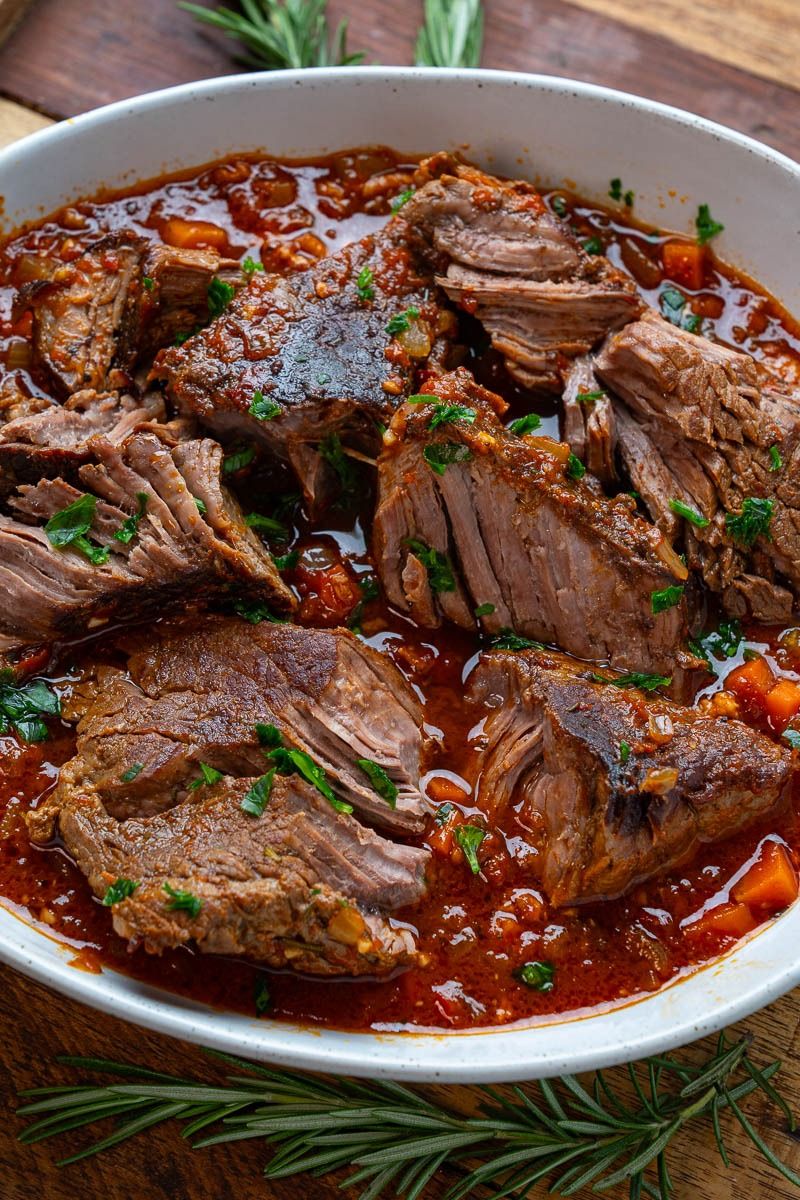
Italian Pot Roast (Stracotto) braises beef chuck in red wine and tomatoes until it falls apart into a rich, spoonable sauce you will want to mop up.
🧂 Ingredients
- 3.5 lb (1.6 kg) boneless beef chuck roast, tied with kitchen twine
- 2 tbsp olive oil
- 1 large yellow onion, finely diced (about 1 1/2 cups)
- 2 medium carrots, finely diced (about 1 cup)
- 2 celery stalks, finely diced (about 3/4 cup)
- 4 garlic cloves, minced
- 1 cup (240 ml) dry red wine, such as Chianti or Sangiovese
- 1 can (28 oz / 800 g) whole San Marzano tomatoes, crushed by hand
- 2 cups (480 ml) low-sodium beef broth
- 1 tsp kosher salt, plus more for seasoning
- 1 tsp freshly ground black pepper
📋 Instructions
- 1Preheat and dry the roast — Preheat the oven to 300 F (150 C). Pat the chuck roast completely dry with paper towels and season all over with the kosher salt and black pepper, pressing the seasoning into the surface.
- 2Sear the beef — Heat the olive oil in a large Dutch oven over medium-high heat until it shimmers, about 2 minutes. Add the roast and sear undisturbed for 4 to 5 minutes per side, about 12 minutes total, until deeply golden brown on all sides, then transfer to a plate.
- 3Build the soffritto — Lower the heat to medium and add the onion, carrot, and celery to the pot. Cook for 6 to 8 minutes, stirring occasionally, until softened and the onion is translucent and just turning golden at the edges.
- 4Bloom the garlic — Stir in the garlic and cook for 45 seconds, just until fragrant. Do not let it brown or it will turn bitter.
- 5Deglaze with wine — Pour in the red wine and scrape up every browned bit from the bottom of the pot with a wooden spoon. Simmer for 3 to 4 minutes until the wine reduces by about half and the sharp alcohol smell is gone.
- 6Add tomatoes and broth — Stir in the crushed tomatoes and beef broth, then nestle the roast back into the pot along with any juices on the plate. The liquid should come about two-thirds of the way up the meat; add a splash more broth if needed.
- 7Braise low and slow — Cover the pot and transfer to the oven. Braise for 2 hours 30 minutes to 3 hours, turning the roast once at the halfway point, until a fork slides in with no resistance and the meat shreds easily, or an instant-read thermometer reads 200 to 205 F (93 to 96 C).
- 8Reduce the sauce — Transfer the roast to a cutting board and rest for 10 minutes. Meanwhile, skim the fat from the surface of the braising liquid and simmer it on the stovetop over medium heat for 8 to 10 minutes, until it coats the back of a spoon, then taste and season.
- 9Slice and serve — Remove the twine, slice or shred the stracotto, and return it to the pot with the sauce, or ladle the sauce over the sliced meat on a platter. Serve hot over polenta, mashed potatoes, or egg noodles.